
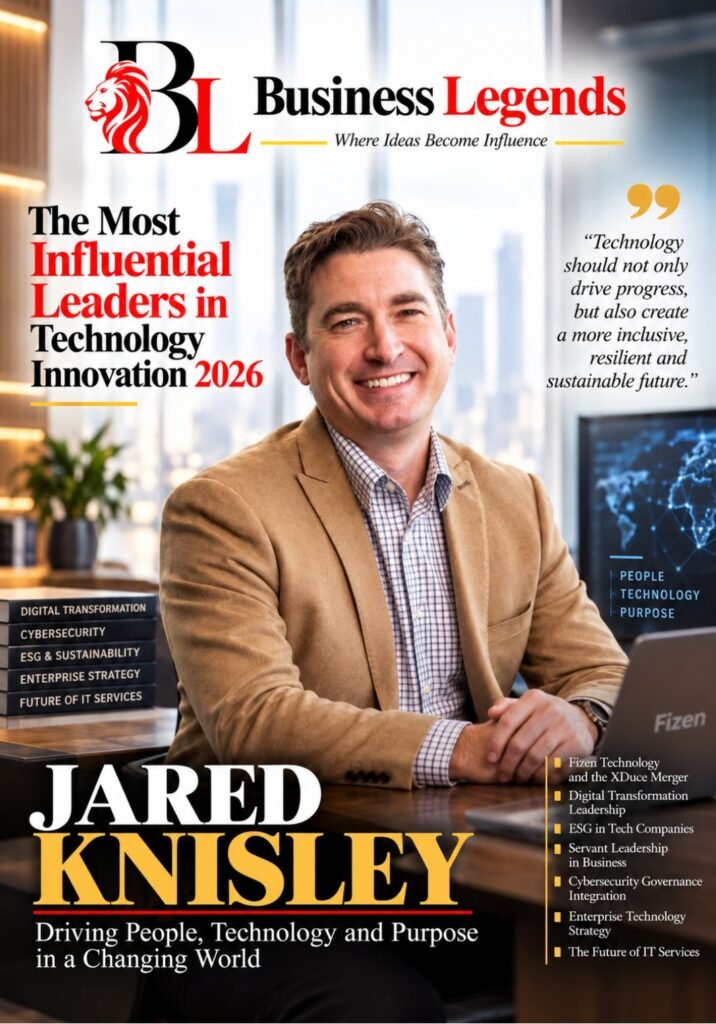
Jared Knisley: Leading Technology Transformation with Purpose
In today’s rapidly evolving technology landscape, transformation requires more than ambition. It demands clear strategy, strong leadership and the ability to bring people together around a shared vision. Jared Knisley, Managing Principal of Fizen Technology, represents this approach to organizational change.
His role in the integration of XDuce and Fizen reflects a broader challenge facing technology services companies: how to combine capabilities, align teams and deliver greater value without losing sight of the people behind the business.
For Knisley, transformation is not simply about expansion. It is about creating an organization in which technology, cybersecurity, governance and advisory services work together toward a common purpose.
A Strategic Merger Built for the Future
The integration of XDuce and Fizen was designed to create a more connected technology services model. By bringing complementary capabilities together, the organization aimed to address clients’ needs through a more integrated approach.
The vision encompasses advisory and consulting, technology solutions, cybersecurity, governance and compliance. Together, these capabilities can help organizations navigate an increasingly complex digital environment.
However, combining businesses requires more than aligning service portfolios. It also involves integrating systems, establishing shared processes and reconciling different working cultures.
Consequently, effective leadership becomes essential. The challenge is to create operational consistency while preserving the strengths that each organization brings to the partnership.
Leading Integration Through People
While mergers often emphasize operational efficiency and business scale, Knisley’s approach places people at the center of transformation.
Structured vision sessions and open dialogue help teams understand the direction of the combined organization. These conversations also create opportunities for employees to contribute perspectives and identify potential challenges.
Furthermore, integration requires clear expectations across departments. Shared performance metrics, consistent communication and cross-functional collaboration can help translate strategic objectives into everyday practice.
Bringing technical and compliance teams into the same discussions is particularly important. Innovation must advance alongside security, risk management and accountability.
This balance helps establish an environment in which agility and responsible execution reinforce one another.
Connecting Growth with Responsible Governance
Technology leadership increasingly requires organizations to consider more than financial performance. Security, compliance, organizational culture and stakeholder expectations also influence long-term success.
Environmental, social and governance (ESG) considerations can provide a framework for evaluating these broader responsibilities. When integrated into business decisions, they can help organizations assess the implications of growth for employees, clients and communities.
For technology services companies, responsible governance is especially relevant. Clients depend on secure systems, reliable processes and clear accountability.
A business model that incorporates these considerations can support more sustainable relationships. It also helps ensure that innovation is pursued with an understanding of its operational and societal implications.
Servant Leadership During Change
At the heart of people-centered transformation is servant leadership. This approach emphasizes listening, empowerment, transparency and a commitment to helping others succeed.
During organizational integration, these principles can be particularly valuable. Employees may face uncertainty about responsibilities, processes and future opportunities.
Clear communication helps address those concerns. Equally important, giving teams a voice in the transition can encourage ownership and strengthen collaboration.
Rather than treating change as a purely top-down exercise, leaders can build alignment by explaining why decisions matter and how they contribute to shared objectives.
For Knisley, this leadership perspective offers a way to connect organizational change with the everyday experiences of the people responsible for delivering it.
Redefining the Technology Services Model
As businesses navigate digital transformation, the boundaries between technology, cybersecurity and governance are becoming increasingly interconnected.
An integrated service model recognizes these relationships. Technology can enable innovation, cybersecurity can strengthen resilience, governance can establish accountability, and advisory services can connect strategy with execution.
When these capabilities operate in coordination, clients can approach complex challenges with a clearer view of both opportunities and risks.
For Fizen Technology, the integration of these disciplines represents an opportunity to develop a more cohesive service model. Its long-term value will depend on how effectively the organization translates this vision into measurable client outcomes.
Building a Legacy of Opportunity
Organizational transformation also creates an opportunity to shape the employee experience.
Beyond business growth, a successful integration can support professional development, cross-functional learning and broader career opportunities. It can also encourage teams to share expertise across disciplines that previously operated separately.
Building this environment requires sustained attention. Leaders must connect strategic priorities with practical opportunities for employees to develop their skills and contribute to the organization’s direction.
In this sense, the lasting impact of a merger extends beyond the transaction itself. It is reflected in the capabilities, relationships and culture that emerge afterward.
A Leadership Blueprint for Modern Enterprise
Jared Knisley’s story highlights a central challenge of modern technology leadership: achieving alignment across strategy, people and execution.
The integration of XDuce and Fizen illustrates the importance of connecting complementary capabilities while addressing the human dimensions of organizational change.
As technology services continue to evolve, organizations will need leaders who can balance innovation with accountability and ambition with responsible execution.
Ultimately, transformation is not defined by structural change alone. Its enduring value lies in what an organization enables its people and clients to accomplish together.